
Discarded food seems harmless compared with plastic or other trash. After all, it’s natural and biodegrades. So what’s the problem with throwing a head of lettuce in the garbage?
Why food waste is a problem
Landfill space & greenhouse gas emissions
In a compost pile, food decomposes in the presence of oxygen in approximately two to six weeks, releasing carbon dioxide as it breaks down. By comparison, in a landfill, food is buried in largely anaerobic conditions, which greatly slows down its decomposition; a head of lettuce can take more than two decades to break down. In addition, instead of carbon dioxide, this anaerobic process releases methane—a powerful greenhouse gas that traps 28 times more heat than carbon dioxide over a 100-year period. Ammonia is also released, which can have negative effects on air quality, such as contributing to Salt Lake City’s winter inversions.
Wasted resources
Many resources are wasted along with discarded food. Food that ultimately goes unsold or uneaten consumes enormous resources, including 22% of U.S. freshwater and 16% of cropland. In addition, labor, chemicals, and energy directed towards production, processing, transportation, storing, and preparing crops and foods are wasted. With freshwater supplies under increasing pressure in many parts of the world, wasting the water embedded in uneaten food is particularly troubling. According to the Water Footprint Network, throwing away one pound of bananas wastes nearly 100 gallons of water; one discarded pound of beef wastes an astounding 1,800 gallons of water, which is roughly the equivalent of running a shower for around 6 straight hours.
And of course, the financial waste is significant: 2% of our nation’s GDP goes towards food that is unsold or uneaten, a dollar amount bigger than many country’s entire GDP.
Where does most food waste come from? The answer may surprise you. The primary source is not farmers or other food producers, manufacturers, businesses, or restaurants. The majority of food waste comes from households, from people like you and me. One survey found that one person averages about $1500 per year spent on discarded food.
Food waste in America

Food is the single most common material sent to U.S. landfills, accounting for approximately 24% of landfilled municipal solid waste. In fact, it is estimated that up to 40% of all food produced is thrown away.
Now back to the head of lettuce. Let’s say it weighs one pound. Can you imagine a pile…no, a mountain…of 133 billion green leafy spheres? That’s how much food the USDA estimated went uneaten at the retail and consumer levels in the U.S. in 2010. To put the enormous scale of our food waste into perspective, Americans discard enough food to fill the Rose Bowl in Pasadena (with a seating capacity of 90,000) every single day.
Globally, food loss and waste is responsible for an estimated 8–10% of greenhouse gas emissions. If food waste were a country, its emissions would rank behind only China and the United States, according to the United Nations.
For more further reading on food waste in America, I recommend this article by Fortune.
How to reduce food waste
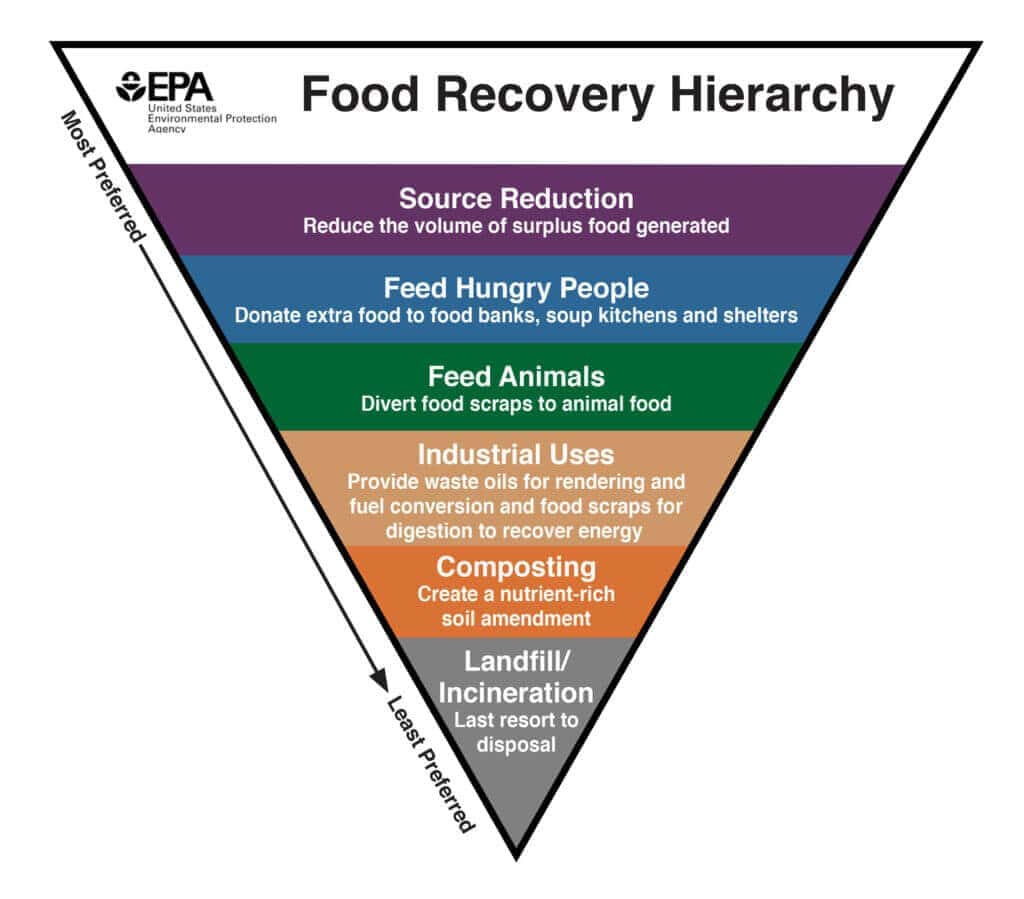
As with any waste stream, reduction is the first and most important step. According to the EPA, the most important step in reducing food waste is source reduction. Furthermore, Project Drawdown rates reducing food waste as the single most impactful climate action that households can do. The following steps will explain how to reduce food waste at home.
The goal isn’t to become perfect at using every scrap of food. Focus first on preventing edible food from going to waste; composting and other disposal methods come later for the scraps that can’t reasonably be eaten.
1. Plan before you shop
- Meal planning helps to avoid unnecessary purchases. SaveTheFood.com has some great planning tools, as well as other helpful resources.
- If you’re ready to use an ingredient right away, don’t be afraid to buy the discounted items at the store that are near their sell-by or best-by dates. You save that item from being wasted and save money doing it.
- Shop from your fridge and pantry first, and plan meals accordingly. For example, if you have a head of lettuce that needs to get used, maybe you can plan tacos for dinner one night, lettuce wraps the next, and a salad for lunch the next day.
- Get creative. Recently I discovered a plethora of soft apples in the produce drawer that I had forgotten about, and instead of throwing them away, I used them to try out this delicious apple butter. Many overripe fruits are great in baked goods, smoothies, or sauces. Use an app or website like AllRecipes that you can search by ingredient to use up whatever you have on hand.
2. Buy only what you’ll use
This seems obvious, but overbuying is one of the biggest culprits leading to food waste at home. Think Costco-sized produce packages or buying a bunch of something just because it’s on sale.
One possible option to help achieve this is to enroll in a meal kit delivery service; one study found using meal kits can decrease food waste by 38%. Check for any locally owned and operated companies in your area. However, from a sustainability standpoint, the only caveat to pre-portioned meal kits is their additional packaging waste.
3. Understand food date labels
Confusion surrounding food product dating, i.e. Best if Used By/Before, Sell-By, Use-By, and Freeze-By dates leads to a lot of unnecessary disposal of food suitable to eat.
Most dates on food packages are indicators of quality, not safety. Food doesn’t automatically become unsafe when a “best by” or “best if used by” date passes. Instead of throwing food away based solely on the date, consider how it has been stored and use your senses to check for signs of spoilage, such as mold, an off smell, or changes in texture. Proper food-safety practices still matter, since disease-causing microorganisms aren’t necessarily detectable by sight or smell—but that’s true whether a food is before or after its package date.
Infant formula is an important exception: its “use by” date is federally regulated to ensure the formula continues to meet its labeled nutrient content and quality standards.
Check out my blog post on food expiration dates to learn more.
4. Store food properly
Proper handling and storage are the best ways to maximize the shelf life of food. Take time to learn the best way to store foods, as there are many factors to consider. Produce is the most wasted type of food, so proper storage is especially key.
Some important tips:
- Not all produce need to be refrigerated and are best stored at room temperature on the counter or in the pantry:
- Potatoes/Sweet potatoes
- Onions
- Garlic
- Tomatoes, although this depends on who you ask.
- Some fruits: apricots, avocados, bananas, kiwis, mangos, nectarines, papayas, peaches, plums, and pineapple
- Fruits, in general, produce ethylene gas, which fosters natural ripening, but it also can hasten ripening and spoilage in vegetables and a few non-ethylene producing fruits. Ideally, ethylene-producing fruits should be stored in the refrigerator away from ethylene-sensitive fruits and vegetables. Learn which foods produce ethylene and which are ethylene-sensitive.
- Store potatoes and onions separately (at least a three feet apart); like some fruits, onions produce ethylene gas, and potatoes have a high moisture content can cause onions to go mushy.
- Save washing produce for right before preparing/eating rather than before storage.
- Keep your refrigerator temperature below 40°F.
- My favorite storage hacks: wrap celery in tin foil and store herbs like cilantro in a jar with their stems in an inch or two of water. You’ll be surprised at how much this prolongs their life.
5. Organize your refrigerator
It’s easy to lose track of foods in your fridge, or how long they’ve been there. One trick that works for me is to write the date I opened a jar or carton with a Sharpie. The USDA has a Foodkeeper app where you can look up storage dates of specific items.
Designate one visible area of your refrigerator for food that needs to be eaten soon: leftovers, opened containers, ripe produce, half an onion, etc. Check this area before planning lunch or dinner.
A few other habits can help keep food from disappearing into the refrigerator abyss:
- Move older foods to the front.
- Keep leftovers at eye level instead of shoved into drawers.
- Label leftovers with the date.
- Have one “use-it-up” dinner each week.
- Freeze leftovers in individual portions.
- Keep a freezer inventory.
6. Use your freezer
Freezing extra food is a great preservation tool. Many items freeze well: produce, meats, leftovers, herbs, even cheese. If you don’t think you’ll eat leftovers within the next few days, freeze them while they’re still fresh rather than waiting until they’re on the verge of going bad. Then on nights when you need a quick, easy meal, just defrost and voila! Same goes for veggies; you can even dice them so they’re ready to throw into a soup later. Frozen bananas and berries are perfect for smoothies. Food kept continuously frozen at 0°F remains safe indefinitely, although its flavor and texture will eventually decline. Recommended freezer storage times are generally about quality, not safety.
Tip: Take inventory occasionally; it’s very easy for stuff to get buried and forgotten. Hang a list of contents on the freezer door to help you remember what’s in there and mark items off as you take them out. Have one night per week be from a freezer clean out.
My favorite containers for storing freezer foods are glass jars and silicone food storage bags. The airtight vacuum seal created by the FoodSaver Vacuum Sealing System does an excellent job at preventing freezer burn, but the tradeoff is long-term storage of foods in plastic, as well as the waste.
Check out my blog post on the best food storage containers for non-toxic and eco-friendly food storage options.
7. Preserve extra food
Learn other food preservation techniques, such as canning, dehydrating, or freeze drying. Your local state university extension service is a great source of information and offer free/inexpensive courses such as these from Utah State University.

What to do with food you can’t use
Donate food
One word: Gleaning. This is collecting excess food from events, farmer’s markets, grocery stores, and your home garden and donating it to people in need. Feeding the hungry is the second preferred stop on the EPA’s Food Recovery Hierarchy. In the U.S. there are 34 million people, including 9 million children, who are food insecure, indicating that food waste is not an overproduction problem but rather one with distribution. For every 600,000 pounds of food, 400,000 people could be given three meals a day for 18 months. Think about how many people could be fed from our country’s annual 133 billion pounds of food waste.
Where to donate food
- Donate to a local food bank or pantry. They might accept cans up to one year past sell-by or best-buy date.
- If you have a home garden, there are many options for donating excess produce, besides unloading 100 zucchinis on your neighbors. Check for locations on Ample Harvest.
- For those with fruit trees, unless you use all the harvest, search for a gleaning program in your area. These groups send volunteers to your house to pick the fruit and donate to those in need.
- Check whether you area has any community fridges, or “freedges”, where anyone can place excess food for others experiencing food insecurity to take what they need.
- Donate food to, or volunteer for, a food rescue program. These organizations arrange for excess food that might otherwise be disposed of to be picked up by volunteer “rescuers” and taken to non-profits that can use it, such as the YWCA, Boys & Girls Club, or homeless shelters. Check the Food Rescue Locator for options near you.
- Don’t be afraid to ask your favorite restaurants what they do with their food waste, and let them know about food rescue programs in your area. You can also utilize these organizations yourself if you have any excess food from a party, wedding, corporate gathering, etc. If you work at a school, event or sports venue, or other business, talk to the appropriate people about getting set up to donate your excess food.
Feed animals
Feeding animals is the next step to reduce food waste. To donate food scraps to animals, the EPA recommends contacting your local solid waste, county agricultural extension office, or public health agency for information.
Other ideas may include contacting your local zoo or animal sanctuary, area farms and ranches, or your neighbor who has backyard chickens.
Composting food
For food that is unfit for human or animal consumption, composting is the next step. This is divided into two parts, and industrial uses, which you may not have ever heard of, is the more desirable of the two.
Biodigestion
Using food waste to create energy is the fourth choice on the EPA’s Food Recovery Hierarchy. Anaerobic digestion is a fascinating process that takes food waste into a facility that acts similarly to a large stomach and “digests” the material, resulting in rich compost. The biogas that is created provides fuel for heating and electricity.
Wasatch Resource Recovery is a facility in North Salt Lake. The city recently expanded curbside food waste pickup service to my neighborhood. They’ve made a great video explaining the biodigestion process.
Check to see if there is an anerobic digesting facility in your area. Like Wasatch Resource Recovery, it may allow people to drop off their food waste for free. Or your city might have a curbside food waste collection program for residential, businesses, or both.
The benefit of this type of processing is that you can literally scrape your plate for collection. Just about any food item is acceptable, including foods that cannot normally be composted like meat and bones, dairy products, and fats/oils. Some people freeze their food waste until it can be collected, in order to cut down on odors and pests.
Home composting methods
The previous option is currently very limited since anaerobic digesters are few. Composting is the last preferred choice for food waste before the landfill, and you have a few options.
Indoor composting
The most comprehensive, easy (and expensive) option to process food waste at home is to purchase a countertop composting machine, such as Lomi. The advantage of this versus traditional composting is that, like biodigestion, you can add items that cannot normally be composted in your backyard, like meat scraps, leftovers, and approved bioplastics.
The other choice is vermicomposting, which is composting with worms. They can be kept in a container in a garage or closet. The compost can be added to soil, houseplants, or used to make worm tea.
Outdoor composting
Backyard composting has numerous benefits for the quality of your garden soil, including improving nutrient levels, texture, and water retention capabilities. If you want to try composting on your own, there are many great options to learn the different methods and how to go about it. Check with your local community gardens or state university extension service for classes. Learn the basics of composting here.
If you aren’t interested in composting or don’t have the space, use your city green waste can. In addition to the typical yard waste, you can add certain types of food scraps. However, the accepted items are much more strict than the ‘scrape your plate’ option of food waste digesters or even what you can compost on your own.
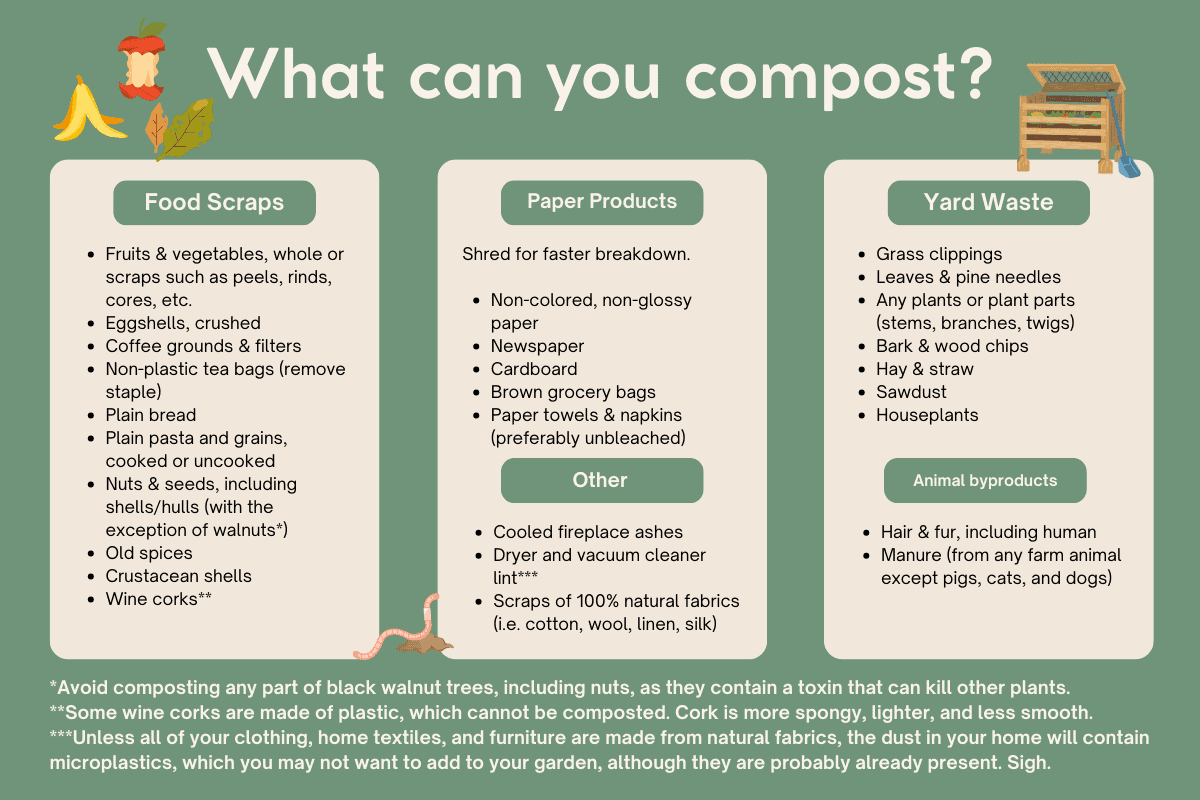
In general, you should be safe to add tea bags & coffee grounds, fruits & vegetables, and eggshells to any green waste bin. Honestly, I think you would be fine adding any more, but check with your waste collection service.
If you don’t have a yard or green waste can, click here to find a composting location near you.
Things that Cannot be Composted
Some of these materials attract pests, while others contain pathogens that are not likely to be killed as traditional composting does not reach the heat levels necessary to kill them.
- Dairy products
- Meat or fish
- Bones
- Cooked foods
- Fats, oils, or grease
- Produce stickers
- Pet (cat/dog) or human waste
- Cat litter
- Construction material/lumber
- Painted or treated wood
- Herbicide-treated plants and grass
- Diseased and pest-infested plants
- Weeds (the heat will likely not reach high enough temperatures to kill the seeds and prevent spread)
- Synthetic products like plastic
Learn more ways to utilize green waste in your yard and other ways to create a sustainable garden here.
Helpful Hint
Whichever method you choose, I recommend purchasing a countertop compost bin to collect your kitchen scraps. It’s simple to place it next to your cutting board as you prepare a meal. I had an older version of this OXO compost bin for a long time, and now I use this Simple Human Compost Caddy that hooks onto the side of my trash can. If I’m doing a lot of cooking or preserving, I’ll use a large bowl instead to collect all the cores/stems/peels, etc., and if I have a brown paper grocery bag I will use that and then toss the entire thing in my green waste can since those bags are also compostable.
Looking for more ways to reduce your food impact?
Eat more plant-based foods. Note this does NOT necessarily mean becoming a vegetarian. But it is important to decrease your meat intake. Maybe in your household this simply means starting by instituting Meatless Mondays. However you choose to reduce your meat and dairy intake, know that this is the second-most impactful climate action you can take, next to decreasing your food waste. Raising livestock is responsible for 15% of greenhouse gases, as well as 41% of deforestation—far more than any other industry, including palm oil and paper.
Buy food locally and buy in season. Find local grocers, farmers markets, and farm produce stands to shop at. This reduces transportations, storage, and ultimately cost to you. You also benefit from fresher, more nutritious foods while you support your local economy.
Food Waste FAQs
How does food waste affect the environment?
Food waste accounts for 8-10% of global greenhouse gas emissions. Many resources are wasted as well, especially water, energy, farmland, transportation, and labor.
Does food decompose in the landfill?
It does, but much more slowly than it would in a compost pile. And because it gets buried under layers of trash, it loses access to oxygen and produces methane, a potent greenhouse gas, as it breaks down.
What are the best ways to reduce food waste at home?
The best way to reduce food waste is to prevent it in the first place. Plan meals before shopping, check your refrigerator and pantry before buying more food, buy only what you can reasonably use, store food properly, and understand that most food date labels indicate quality rather than safety. Use or freeze leftovers and foods that are nearing the end of their useful life, and compost unavoidable food scraps.
What foods are wasted the most?
Fruits and vegetables are among the most commonly wasted foods in U.S. households, in part because fresh produce is highly perishable. Other commonly wasted foods include prepared meals and leftovers, dairy products, bread and baked goods, and meat.
Can you eat food after the expiration date?
Often, yes. Most dates on food packages—including “Best By,” “Best if Used By,” and “Sell By”—are intended to indicate food quality rather than safety. Consider how the food has been stored and check for signs of spoilage rather than automatically throwing it away because a date has passed. Proper food-safety practices still matter because disease-causing microorganisms may be present whether or not food is within its package date. Infant formula is an important exception: its “Use By” date is federally regulated and should be followed.
What should I do with leftover food I can’t eat?
If the food is still safe to eat, freeze it for later or offer it to family, friends, or neighbors. Unopened, commercially packaged food may also be suitable for donation to a food bank or pantry. Some communities and organizations accept excess garden produce or other perishable foods. If food is no longer edible, compost it when possible rather than sending it to a landfill.
Is composting better than throwing food away?
Yes, composting is preferred to sending food to the landfill because it is able to break down naturally, which is much faster and doesn’t release methane. In addition, the resulting compost is rich in nutrients and excellent to amend garden soil with.
Can cooked food be composted?
It depends. Food prepared with fats and oils, dairy, or meats are not recommended for backyard composting because they can attract pests, create odors, and may not break down adequately. Plain foods free of these ingredients such as rice and other grains, pasta, and steamed vegetables may be composted. Commercial composting facilities can often process a much wider range of cooked foods, including meat and dairy, so check the rules for your local program.